.gif)
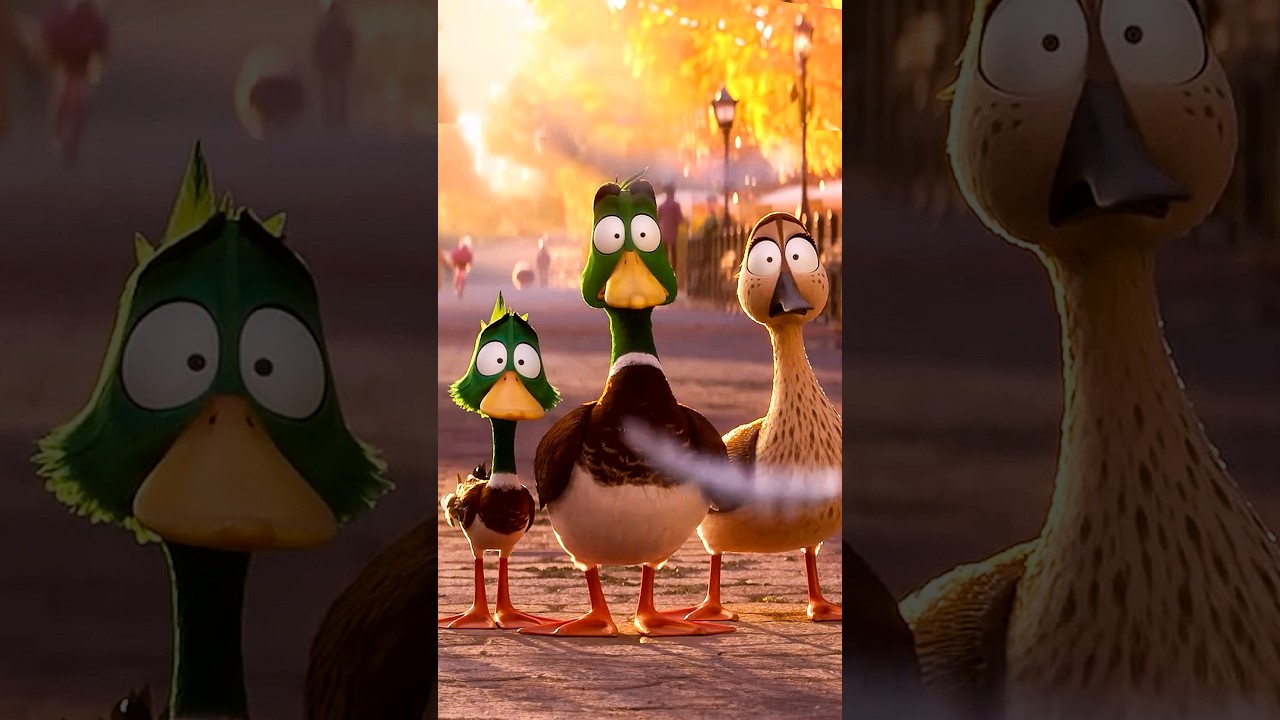
Learn German with Movies | This Bird Gets Completely Destroyed! (A2-B1)
Learn German with Movies – This Bird Gets Completely Destroyed! (A2-B1)
Improve your German listening skills naturally using authentic movie scenes. This hilarious scene features a bird navigating a dangerous city and includes interactive subtitles, vocabulary, grammar notes and exercises.
What You'll Learn
- German expressions used in everyday conversations
- How native speakers express confidence, panic, and quick changes of mind
- Useful vocabulary for intermediate learners (A2-B1)
- Listening comprehension practice with real-time subtitles
📖 How To Study With This Lesson
- Watch with subtitles: Watch the scene with German and English subtitles to understand the context.
- Watch without subtitles: Cover the subtitles or minimize the video to test your listening comprehension.
- Repeat the sentences: Pause the video and repeat each sentence out loud to improve pronunciation.
- Download the PDF: Get the full transcript and translation for offline study and review.
📝 Scene Summary
🇩🇪 Deutsch
In dieser lustigen Szene sagt ein Vogel:
"Wir fliegen nicht noch mal durch diese verrückte Todesfalle die sich Stadt nennt."
Ein anderer Vogel antwortet: "Ach kommt schon das ist doch easy."
Er versucht die anderen zu beruhigen:
"Bleibt einfach dicht bei mir und es wird ganz sicher alles gut gehen."
Dann fragt er: "Alles okay?"
Der andere antwortet: "Ja nein mir geht es gut."
Er versichert: "Ja nichts passiert mir geht es immer noch gut."
Dann sagt er motivierend: "Wir kriegen das hin."
Plötzlich ruft er: "Knapp vorbei Bus!"
Und dann: "Bleibt vielleicht nicht ganz so dicht."
Die Szene zeigt den humorvollen Kontrast zwischen anfänglicher Selbstsicherheit und der schnellen Erkenntnis, dass die Stadt doch gefährlicher ist als gedacht.
🇬🇧 English
In this funny scene, a bird says:
"We are not flying through that crazy death trap they call a city again."
Another bird replies: "Oh come on that is so easy."
He tries to reassure the others:
"Just stay close to me and everything will be fine for sure."
Then he asks: "Everything okay?"
The other replies: "Yeah no I am fine."
He assures: "Yeah nothing happened I am still fine."
Then he says encouragingly: "We have got this."
Suddenly he shouts: "That was close Bus!"
And then: "Maybe do not stay quite so close."
The scene shows the humorous contrast between initial confidence and the quick realization that the city is more dangerous than expected.
German Vocabulary
| German | English | Explanation |
|---|---|---|
| fliegen | to fly | To move through the air |
| verrückt | crazy | Mad, insane, or very foolish |
| die Todesfalle | death trap | A dangerous place or situation |
| die Stadt | city | A large town |
| nennen | to call / to name | To give a name to something |
| easy | easy | Simple, not difficult (borrowed from English) |
| dicht | close / tight | Near in distance; also "dense" |
| passieren | to happen | To occur or take place |
| kriegen | to get / to manage | "Wir kriegen das hin" = "We can do this" |
| knapp vorbei | close call / narrowly missed | Something was very close to hitting |
| der Bus | bus | A large road vehicle for passengers |
| sicher | safe / sure | Free from danger or certain |
Grammar Notes
📌 Negation - "nicht noch mal" (not again)
"We are not flying through that again..."
Rule: "nicht" negates the verb, and "noch mal" means "again". Together they mean "not again" or "not one more time".
📌 Relative Clauses - "die sich Stadt nennt"
"...through that death trap that calls itself a city."
Rule: "die" is a relative pronoun referring to "Todesfalle". "sich nennen" means "to call oneself". The conjugated verb goes to the end.
📌 Modal Particles - "doch"
"That is so easy." (with emphasis)
Rule: "doch" is a modal particle that adds emphasis. Here it makes the statement more confident or persuasive.
📌 Word Order - "Bleibt einfach dicht bei mir"
"Stay close to me."
Rule: "Bleibt" is the imperative form for "ihr" (you plural). The verb is in the first position in imperative sentences.
📌 Future with "werden" - "es wird... gehen"
"Everything will be fine."
Rule: The future tense is formed with "werden" + infinitive. "wird gehen" = "will go" or "will be fine".
Frequently Asked Questions
❓ Can movies help you learn German?
Yes, absolutely! Movies improve listening skills and vocabulary naturally because you hear authentic dialogues, expressions, and pronunciation used by native speakers in real contexts.
❓ What level is this lesson?
This lesson is suitable for A2-B1 learners (intermediate level). It contains common everyday expressions and clear pronunciation that are perfect for learners who already have basic German knowledge.
❓ Should I watch the scene more than once?
Yes, definitely! Repetition improves comprehension and pronunciation. Watch it multiple times - first with subtitles, then without, and practice repeating the sentences out loud.