.gif)
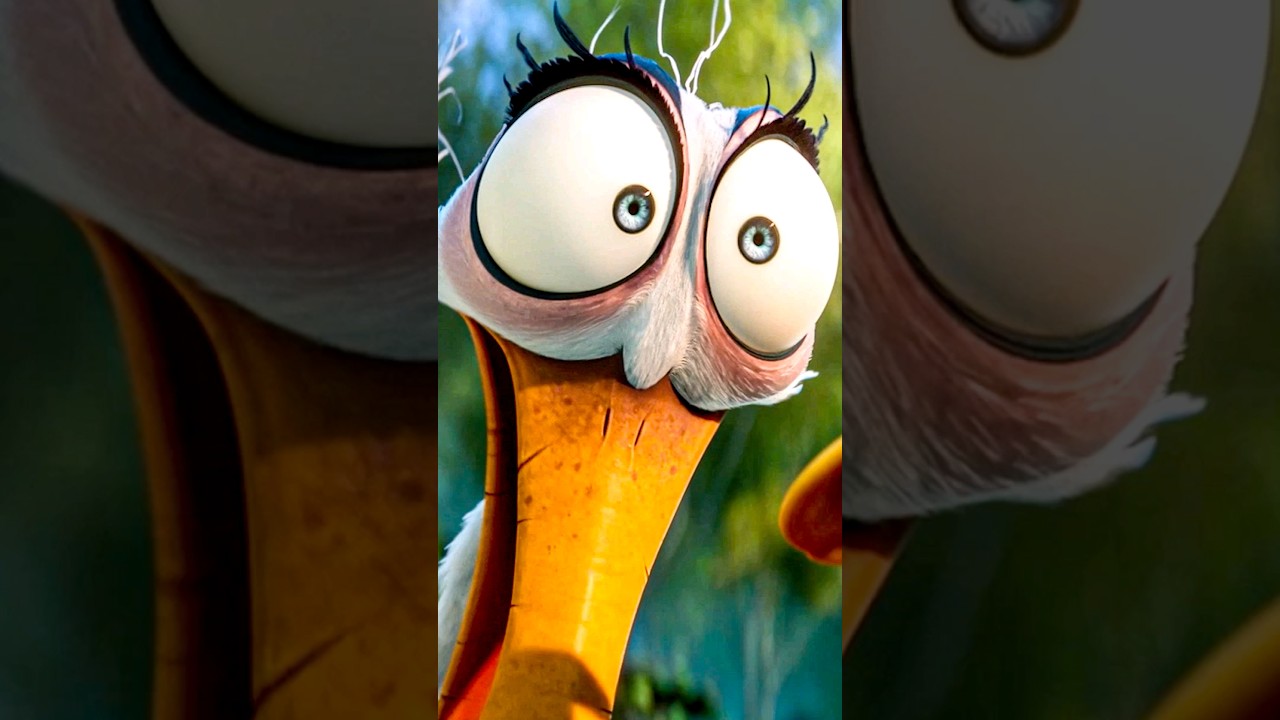
Learn German with Movies | Will She Eat the Cute Ducklings? (A2-B1)
Learn German with Movies | Will She Eat the Cute Ducklings? (A2-B1)
Improve your German listening skills naturally using authentic movie scenes. This darkly comedic scene includes interactive subtitles, vocabulary, grammar notes and exercises.
What You'll Learn
- German expressions used in humorous and dark comedy situations
- How native speakers express uncertainty, jokes, and awkwardness
- Useful vocabulary for intermediate learners (A2-B1)
- Listening comprehension practice with real-time subtitles
📖 How To Study With This Lesson
- Watch with subtitles: Watch the scene with German and English subtitles to understand the context.
- Watch without subtitles: Cover the subtitles or minimize the video to test your listening comprehension.
- Repeat the sentences: Pause the video and repeat each sentence out loud to improve pronunciation.
- Download the PDF: Get the full transcript and translation for offline study and review.
📝 Scene Summary
🇩🇪 Deutsch
In dieser dunkel-komischen Szene fragt jemand:
"Seid ihr sicher, dass ihr schon gehen müsst?
Ich vermisse eure Kinder jetzt schon.
Die sind so bezaubernd.
Und ihr schmeckt so gut.
Vielleicht esse ich euch auch.
Ich scherze nur.
Oder doch nicht?
Das war ein Witz.
Das war ein Witz.
So witzig.
Achtung, Ruhe. Zeit zu gehen.
Danke für alles.
Auf Wiedersehen.
Ich hab Harry noch keinen Abschied gesagt.
Nein, nein, nein.
Würfel meinen zu.
Nein, nein, nein.
Sie müssen nicht näher kommen. Da ist völlig gut."
Die Szene zeigt den humorvollen und etwas unheimlichen Charakter der Unterhaltung, bei der nicht klar ist, ob die Person wirklich die niedlichen Entenküken essen will oder nur scherzt.
🇬🇧 English
In this darkly comedic scene, someone asks:
"Are you sure you have to leave already?
I already miss your children.
They're so charming.
And you taste so good.
Maybe I'll eat you too.
I'm just kidding.
Or am I not?
That was a joke.
That was a joke.
So funny.
Attention, quiet. Time to go.
Thank you for everything.
Goodbye.
I haven't said goodbye to Harry yet.
No, no, no.
Roll mine too.
No, no, no.
You don't need to come any closer. It's perfectly fine like this."
The scene shows the humorous and slightly creepy nature of the conversation, where it's unclear whether the person really wants to eat the cute ducklings or is just joking.
German Vocabulary
| German | English | Explanation |
|---|---|---|
| vermissen | to miss | To feel sadness because someone is not there |
| bezaubernd | charming / enchanting | Very attractive or delightful |
| schmecken | to taste | To have a particular flavor |
| vielleicht | maybe / perhaps | Possibly, but not certainly |
| essen | to eat | To consume food |
| scherzen | to joke / to kid | To say something in a playful way |
| der Witz | joke | Something said to make people laugh |
| witzig | funny | Amusing or humorous |
| die Ruhe | quiet / silence | Absence of noise |
| der Abschied | goodbye / farewell | The act of saying goodbye |
| der Würfel | die | A cube used in games (here: "Würfel meinen zu" = "Roll mine too") |
| näher | closer | More near in distance |
| völlig | perfectly / completely | Totally or completely |
Grammar Notes
📌 Modal Verbs - "müsst" (have to)
"Are you sure that you have to leave already?"
Rule: "müsst" is the conjugated form of "müssen" for "ihr". In subordinate clauses with "dass", the conjugated verb goes to the end.
📌 Subordinate Clauses - "dass"
"Are you sure that you have to leave already?"
Rule: "dass" introduces a subordinate clause. The conjugated verb goes to the end of the clause.
📌 Question Words - "oder" (or)
"Or am I not?"
Rule: "oder" is used to present an alternative or to ask a follow-up question. "Oder doch nicht?" means "Or am I not?" or "Or maybe not?"
📌 Sentence Structure - "Danke für alles"
"Thank you for everything."
Rule: "Danke für..." is a common phrase meaning "Thank you for...". "für alles" means "for everything". This is a fixed expression.
📌 Modal Particles - "schon"
"I already miss your children."
Rule: "schon" is a modal particle that can mean "already" or add emphasis. "schon jetzt" means "already now" or "already at this moment".
Frequently Asked Questions
❓ Can movies help you learn German?
Yes, absolutely! Movies improve listening skills and vocabulary naturally because you hear authentic dialogues, expressions, and pronunciation used by native speakers in real contexts.
❓ What level is this lesson?
This lesson is suitable for A2-B1 learners (intermediate level). It contains common everyday expressions and clear pronunciation that are perfect for learners who already have basic German knowledge.
❓ Should I watch the scene more than once?
Yes, definitely! Repetition improves comprehension and pronunciation. Watch it multiple times - first with subtitles, then without, and practice repeating the sentences out loud.