.gif)
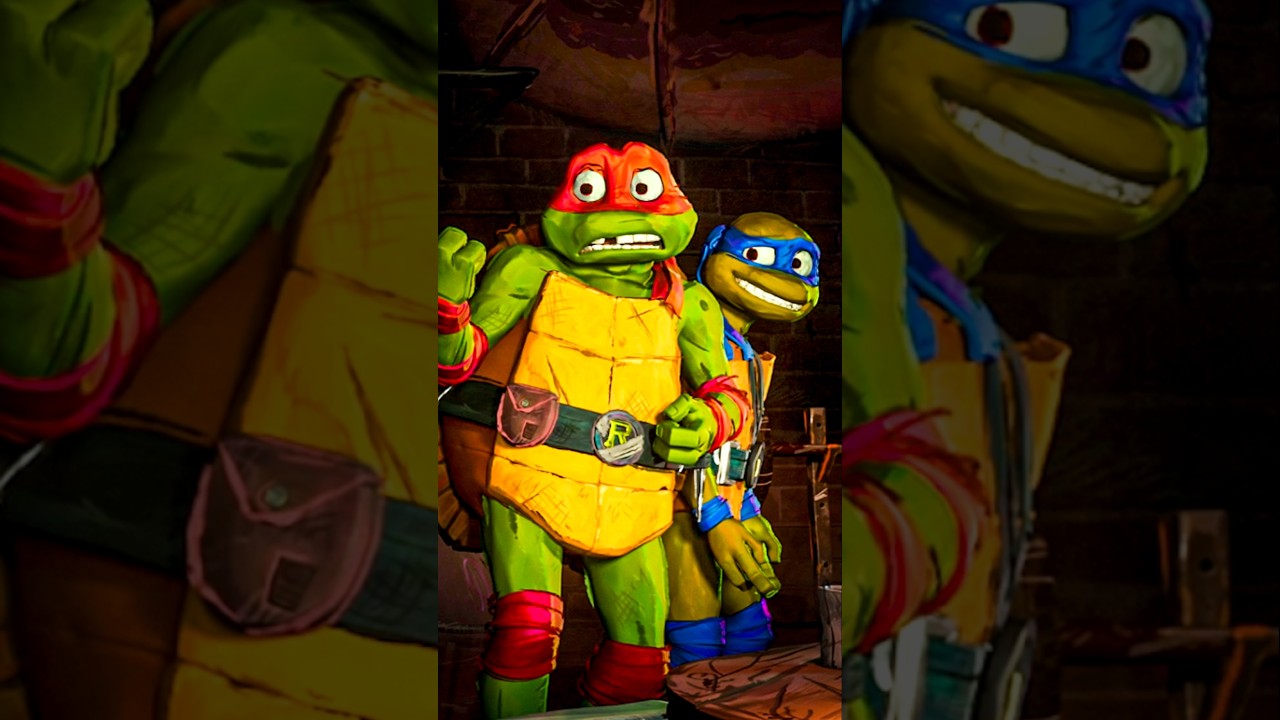
Learn German with Ninja Turtles | "Humans? Yuck!" 🤮 + German Subtitles, Vocabulary & Grammar (A2-B1)
Learn German with Ninja Turtles | "Humans? Yuck!" 🤮 + German Subtitles, Vocabulary & Grammar (A2-B1)
Improve your German listening skills naturally using authentic movie scenes from Teenage Mutant Ninja Turtles. This hilarious scene about watching a movie with humans includes interactive subtitles, vocabulary, grammar notes and exercises.
What You'll Learn
- German expressions used in everyday conversations
- How native speakers express surprise, disgust, and humor
- Useful vocabulary for intermediate learners (A2-B1)
- Listening comprehension practice with real-time subtitles
📖 How To Study With This Lesson
- Watch with subtitles: Watch the scene with German and English subtitles to understand the context.
- Watch without subtitles: Cover the subtitles or minimize the video to test your listening comprehension.
- Repeat the sentences: Pause the video and repeat each sentence out loud to improve pronunciation.
- Download the PDF: Get the full transcript and translation for offline study and review.
📝 Scene Summary
🇩🇪 Deutsch
In dieser lustigen Szene aus den Teenage Mutant Ninja Turtles fragt Splinter: "Jungs, wo habt ihr gesteckt? Ich bin total durchgedreht!" Die Turtles antworten entschuldigend: "Es tut uns sehr leid, Dad." Einer sagt: "Also... ja... uns ist da was dazwischengekommen. Da war so eine Katze, und weißt du, ich habe Angst vor Katzen." Splinter fragt: "Ihr habt gesagt, ihr geht einkaufen und kommt dann sofort zurück. Wo wart ihr?" Ein Turtle erklärt: "Die Jungs wollten einen Film ansehen, ich habe versucht sie davon abzuhalten." Splinter reagiert schockiert: "Ihr habt euch einen Film angesehen... mit MENSCHEN?! Igitt!" Dann fragt er: "Was bist du denn für eine Ratte?" Die Antwort: "Hey! Vorsicht, ganz dünnes Eis!" Die Szene zeigt den humorvollen Konflikt zwischen Splinter und den Turtles über das Anschauen von Filmen mit Menschen.
🇬🇧 English
In this funny scene from Teenage Mutant Ninja Turtles, Splinter asks: "Boys, where have you been? I've been going out of my mind!" The Turtles reply apologetically: "We're very sorry, Dad." One says: "Well... yeah... something came up. There was this cat, and you know, I'm afraid of cats." Splinter asks: "You said you were going shopping and would come back immediately. Where were you?" One Turtle explains: "The boys wanted to watch a movie, I tried to stop them." Splinter reacts shocked: "You watched a movie... with HUMANS?! Yuck!" Then he asks: "What kind of rat are you?" The reply: "Hey! Careful, you're on very thin ice!" The scene shows the humorous conflict between Splinter and the Turtles about watching movies with humans.
German Vocabulary
| German | English | Explanation |
|---|---|---|
| gesteckt | been (hidden) | Past participle of "stecken" - to be somewhere |
| durchdrehen | to go crazy | To lose one's mind (informal) |
| dazwischenkommen | to come up / intervene | Something happens that interrupts plans |
| die Katze | cat | A common household pet |
| die Angst (vor) | fear (of) | Feeling of being afraid |
| einkaufen | to go shopping | To buy things from stores |
| der Film | movie | A motion picture |
| abhalten | to stop / deter | To prevent someone from doing something |
| die Menschen | humans | Human beings |
| igitt | yuck | Expression of disgust |
| die Ratte | rat | A rodent, also used as an insult |
| das Eis | ice | Frozen water, metaphor for risky situation |
Grammar Notes
📌 Question Words - "wo" (where)
"Where have you been?"
Rule: "wo" is the question word for asking about location. "Wo habt ihr gesteckt?" is a colloquial way of asking "Where have you been?"
📌 Present Perfect - "habt ihr gesteckt"
"Where have you been?"
Rule: "habt" is the auxiliary verb for the present perfect with "ihr". "gesteckt" is the past participle of "stecken" (to be somewhere).
📌 Separable Verbs - "durchdrehen"
"I've been going out of my mind!"
Rule: "durchdrehen" is a separable verb. The prefix "durch" separates and goes before "gedreht" in the past participle: "durchgedreht".
📌 Subordinate Clauses - "dass"
"You said that you were going shopping."
Rule: "dass" introduces a subordinate clause. The conjugated verb goes to the end of the clause.
📌 Idiomatic Expressions - "dünnes Eis"
"Very thin ice!"
Rule: "sich auf dünnem Eis befinden" is an idiom meaning "to be in a risky or dangerous situation". "Ganz dünnes Eis!" is a warning that someone is about to cross a line or face consequences.
Frequently Asked Questions
❓ Can movies help you learn German?
Yes, absolutely! Movies improve listening skills and vocabulary naturally because you hear authentic dialogues, expressions, and pronunciation used by native speakers in real contexts.
❓ What level is this lesson?
This lesson is suitable for A2-B1 learners (intermediate level). It contains common everyday expressions and clear pronunciation that are perfect for learners who already have basic German knowledge.
❓ Should I watch the scene more than once?
Yes, definitely! Repetition improves comprehension and pronunciation. Watch it multiple times - first with subtitles, then without, and practice repeating the sentences out loud.