.gif)
Learn German with Kung Fu Panda | From Training to Dragon Warrior + Vocabulary & Grammar (A2-B1)
Learn German with Kung Fu Panda | From Training to Dragon Warrior + Vocabulary & Grammar (A2-B1)
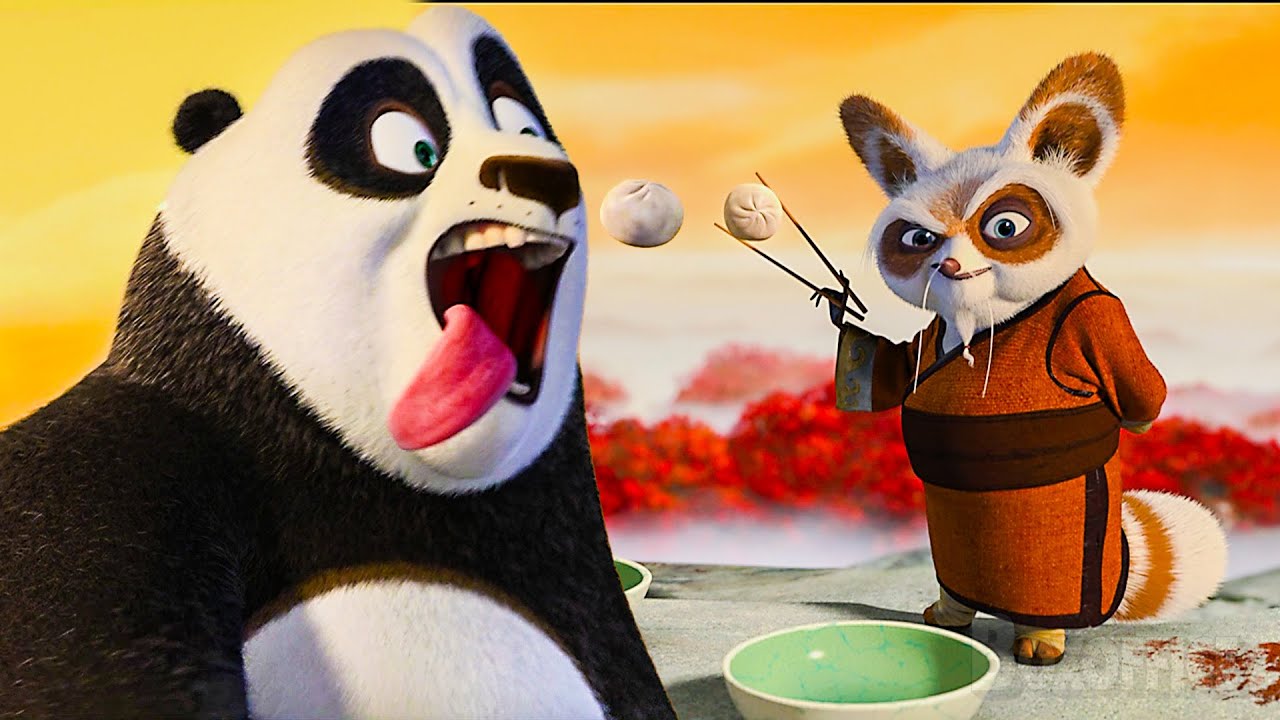
Improve your German listening skills naturally using authentic movie scenes from DreamWorks' Kung Fu Panda. This epic scene follows Po's journey from training to becoming the Dragon Warrior and includes interactive subtitles, vocabulary, grammar notes and exercises.
What You'll Learn
- German expressions used in martial arts and training contexts
- How native speakers express determination, humor, and wisdom
- Useful vocabulary for intermediate learners (A2-B1)
- Listening comprehension practice with real-time subtitles
📖 How To Study With This Lesson
- Watch with subtitles: Watch the scene with German and English subtitles to understand the context.
- Watch without subtitles: Cover the subtitles or minimize the video to test your listening comprehension.
- Repeat the sentences: Pause the video and repeat each sentence out loud to improve pronunciation.
- Download the PDF: Get the full transcript and translation for offline study and review.
📝 Scene Summary
🇩🇪 Deutsch
In dieser epischen Szene aus Kung Fu Panda sehen wir Pos Reise vom Training bis zum Drachenkrieger. Shifu sagt: "Nach dir, Panda." Po ist verwirrt: "Was? Einfach so? Keine Sit-ups? Kein 10-Kilometer-Marsch?" Shifu erklärt: "Ich habe geschworen, dich auszubilden, und das habe ich getan. Es steht dir frei zu essen. Guten Appetit." Po versteht nicht: "Es steht dir frei zu essen? Ach wirklich?" Shifu bestätigt: "Ja, wirklich." Po sagt: "Ich habe keinen Hunger." Später fragt Shifu: "Meister, bist du bereit?" Po antwortet: "Aber sowas von!" Es folgt ein Kampf und Po zeigt seine Entschlossenheit: "Keine Sorge, Meister. Ich gebe niemals auf." Am Ende des Kampfes sagt Po: "Ich bin der Drachenkrieger." Als Tai Lung die Drachenrolle stiehlt, entdeckt er: "Da steht gar nichts!" Po erklärt: "Ist schon okay, ich habe es auch nicht gleich kapiert. Es gibt keine geheime Zutat. Es kommt nur auf dich an." Im finalen Kampf sagt Po: "Ich bin nicht dicker, fetter Panda. Ich bin der dicke, fette Panda!" Und er besiegt Tai Lung mit dem Wuchi-Fingergriff, den er selbst entdeckt hat: "Nö... bin selbst drauf gekommen. Ska-doosh!"
🇬🇧 English
In this epic scene from Kung Fu Panda, we see Po's journey from training to becoming the Dragon Warrior. Shifu says: "After you, Panda." Po is confused: "What? Just like that? No sit-ups? No 10-kilometer march?" Shifu explains: "I swore to train you, and I have done so. You are free to eat. Enjoy your meal." Po doesn't understand: "You are free to eat? Oh, really?" Shifu confirms: "Yes, indeed." Po says: "I'm not hungry." Later Shifu asks: "Master, are you ready?" Po answers: "You bet I am!" A fight follows and Po shows his determination: "Don't worry, Master. I never give up." At the end of the fight, Po says: "I am the Dragon Warrior." When Tai Lung steals the Dragon Scroll, he discovers: "There's nothing there!" Po explains: "It's okay, I didn't get it right away either. There is no secret ingredient. It just depends on you." In the final fight, Po says: "I'm not a big, fat panda. I am the big, fat panda!" And he defeats Tai Lung with the Wuxi Finger Hold, which he discovered himself: "Nope... figured it out myself. Ska-doosh!"
German Vocabulary
| German | English | Explanation |
|---|---|---|
| ausbilden | to train | To teach someone skills |
| geschworen | sworn | Made a solemn promise |
| der Appetit | appetite | Desire to eat |
| der Hunger | hunger | Feeling of needing food |
| bereit | ready | Prepared for something |
| nachsichtig | lenient | Not strict or harsh |
| der Gegner | opponent | Someone you compete against |
| die Schwäche | weakness | A lack of strength |
| die Stärke | strength | <Power or ability |
| der Krieger | warrior | A fighter or soldier |
| die Schriftrolle | scroll | A rolled-up piece of paper |
| die Zutat | ingredient | A component of a recipe |
| der Fingergriff | finger hold | A martial arts technique |
| bluffen | to bluff | To pretend to be stronger than you are |
| kapiert | understood | Got it, understood (informal) |
Grammar Notes
📌 Modal Verbs - "müssen" (must/have to)
"You must choose your own."
Rule: "müssen" expresses necessity or obligation. Conjugated forms: ich muss, du musst, er/sie/es muss.
📌 Present Perfect - "habe geschworen"
"I have sworn..."
Rule: "habe" is the auxiliary verb for the present perfect. "geschworen" is the past participle of "schwören" (to swear).
📌 Infinitive Constructions - "zu essen"
"You are free to eat."
Rule: "zu" + infinitive is used with many verbs and phrases. "stehen frei" means "to be free/allowed".
📌 Subordinate Clauses - "dass"
"Didn't you say that you were ready?"
Rule: "dass" introduces a subordinate clause. The conjugated verb goes to the end of the clause.
📌 Modal Particles - "aber"
"You bet I am!"
Rule: "aber" can be used as a modal particle to add emphasis. "Aber sowas von!" is a very emphatic way of saying "Absolutely!" or "You bet!"
Frequently Asked Questions
❓ Can movies help you learn German?
Yes, absolutely! Movies improve listening skills and vocabulary naturally because you hear authentic dialogues, expressions, and pronunciation used by native speakers in real contexts.
❓ What level is this lesson?
This lesson is suitable for A2-B1 learners (intermediate level). It contains common everyday expressions and clear pronunciation that are perfect for learners who already have basic German knowledge.
❓ Should I watch the scene more than once?
Yes, definitely! Repetition improves comprehension and pronunciation. Watch it multiple times - first with subtitles, then without, and practice repeating the sentences out loud.