.gif)
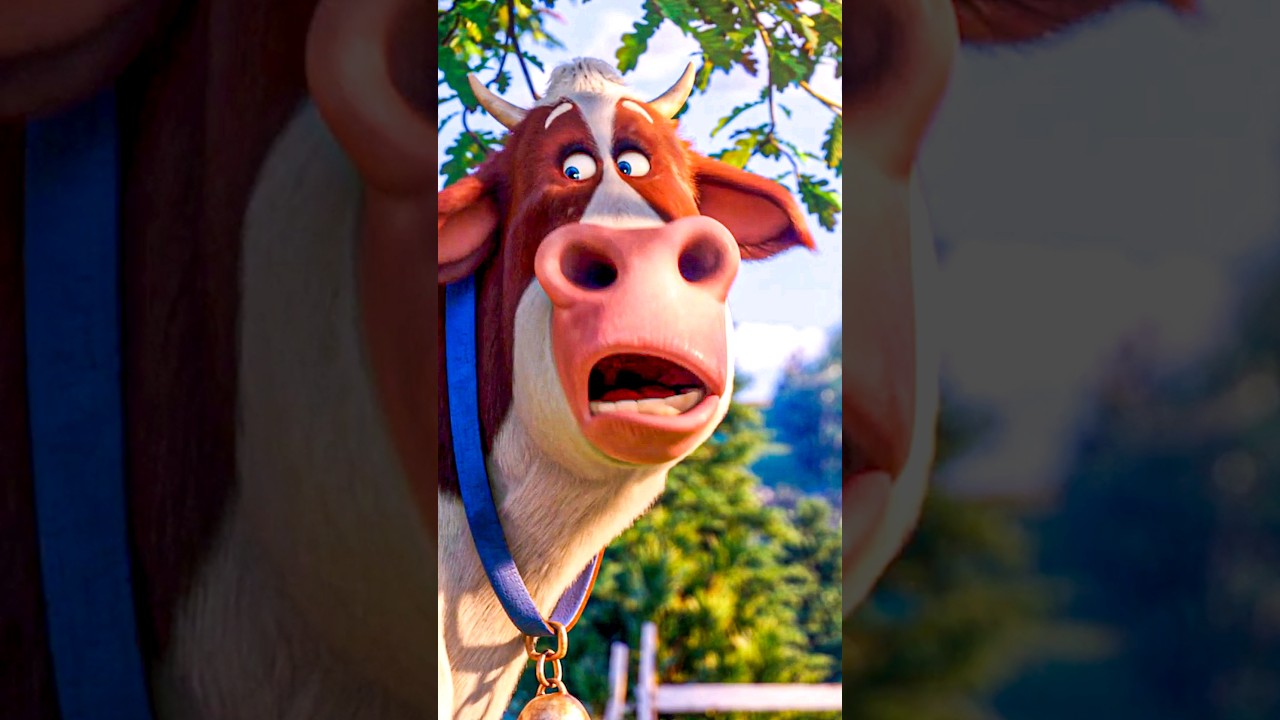
Learn German with Movies | The Cow Destroys the Dog 🐮🐶🤣 + Vocabulary & Grammar (A2-B1)
Learn German with Movies | The Cow Destroys the Dog 🐮🐶🤣 + Vocabulary & Grammar (A2-B1)
Improve your German listening skills naturally using authentic movie scenes. This hilarious animal comedy scene includes interactive subtitles, vocabulary, grammar notes and exercises.
What You'll Learn
- German expressions used in everyday conversations
- How native speakers express surprise, sarcasm, and humor
- Useful vocabulary for intermediate learners (A2-B1)
- Listening comprehension practice with real-time subtitles
📖 How To Study With This Lesson
- Watch with subtitles: Watch the scene with German and English subtitles to understand the context.
- Watch without subtitles: Cover the subtitles or minimize the video to test your listening comprehension.
- Repeat the sentences: Pause the video and repeat each sentence out loud to improve pronunciation.
- Download the PDF: Get the full transcript and translation for offline study and review.
📝 Scene Summary
🇩🇪 Deutsch
In dieser lustigen Szene begrüßt jemand eine Kuh: "Hallo, Kuh!" Dann sagt die Person: "Du bist eine Kuh, jetzt musst du... Muuuuh!" Plötzlich verwandelt sich die Person in einen Hund: "Wuff, wuff! Was? Oh, ich bin ein Hund! Ich wedle mit dem Schwanz wie ein Vollidiot!" Die andere Person reagiert: "Nicht cool, Alter, nicht cool." Der Hund bettelt: "Oh, wirfst du das Bällchen? Oh bitte, wirf das Bällchen! Und ich hole es, weil mein Gehirn so groß ist wie ein Rattenköttel!" Die andere Person: "Okay, ja ist klar, hab's kapiert. Ja, ja." Der Hund: "He-he, ich pinkle den Baum an!" Die andere Person: "Okay, ja, toll. Wir sind weg." Der Hund: "Alles klar. Dann starre ich jetzt einfach die Tür an, bis ihr zurückkommt." Die Szene zeigt den humorvollen und absurden Charakter der Tierkomödie.
🇬🇧 English
In this funny scene, someone greets a cow: "Hello, cow!" Then the person says: "You're a cow, now you have to... Moo!" Suddenly the person transforms into a dog: "Woof, woof! What? Oh, I'm a dog! I wag my tail like a total idiot!" The other person reacts: "Not cool, man, not cool." The dog begs: "Oh, will you throw the ball? Oh please, throw the ball! And I'll fetch it because my brain is as big as a rat turd!" The other person: "Okay, yeah, I get it, I got it. Yeah, yeah." The dog: "He-he, I'm peeing on the tree!" The other person: "Okay, yeah, great. We're gone." The dog: "Alright. Then I'll just stare at the door until you get back." The scene shows the humorous and absurd character of the animal comedy.
German Vocabulary
| German | English | Explanation |
|---|---|---|
| die Kuh | cow | A female cattle animal |
| der Hund | dog | A common household pet |
| wedeln | to wag | To move from side to side (tail) |
| der Schwanz | tail | The rear appendage of an animal |
| der Vollidiot | total idiot | A complete fool (strong, informal) |
| cool | cool | Awesome, great (informal, borrowed from English) |
| der Alter | man / dude | Informal way to address someone (similar to "dude") |
| das Bällchen | little ball | A small ball (diminutive of "Ball") |
| das Gehirn | brain | The organ in the head that controls thought |
| der Rattenköttel | rat turd | Rat droppings (vulgar, humorous) |
| pinkeln | to pee | To urinate (informal, childish) |
| der Baum | tree | A tall plant with a trunk |
| die Tür | door | A movable barrier at an entrance |
| starren | to stare | To look at something for a long time |
Grammar Notes
📌 Modal Verbs - "musst" (have to)
"Now you have to... Moo!"
Rule: "müssen" expresses necessity or obligation. "musst" is the conjugated form for "du". The verb that follows is in the infinitive.
📌 Sentence Structure - Main Clauses
"I wag my tail."
Rule: In German main clauses, the conjugated verb is always in the second position. "Ich" (subject) + "wedle" (verb) + "mit dem Schwanz" (object).
📌 Comparisons - "so...wie" (as...as)
"My brain is as big as a rat turd!"
Rule: "so...wie" is used to make comparisons of equality. "so" precedes the adjective, "wie" comes before the comparison object.
📌 Subordinate Clauses - "bis" (until)
"...until you get back."
Rule: "bis" introduces a subordinate clause of time. The conjugated verb goes to the end of the clause.
📌 Informal Language - Colloquial Expressions
"I got it."
Rule: "Hab's kapiert" is a colloquial way of saying "I understand". "kapiert" is the past participle of "kapieren" (to get/understand) and is very common in spoken German.
Frequently Asked Questions
❓ Can movies help you learn German?
Yes, absolutely! Movies improve listening skills and vocabulary naturally because you hear authentic dialogues, expressions, and pronunciation used by native speakers in real contexts.
❓ What level is this lesson?
This lesson is suitable for A2-B1 learners (intermediate level). It contains common everyday expressions and clear pronunciation that are perfect for learners who already have basic German knowledge.
❓ Should I watch the scene more than once?
Yes, definitely! Repetition improves comprehension and pronunciation. Watch it multiple times - first with subtitles, then without, and practice repeating the sentences out loud.